Banco Federal de Finanças
Marketing Campaign Analysis
Prepared by North Wind Consulting
1 · The Spray-and-Pray Tax
In the three years of your campaign, the month of May had the most calls — totalling 12,370 contacts — and you lost –$2.61 on each of them. In May you did not hold back, reaching out to thousands of people in low-conversion groups that almost always lose money. By contrast, in your high-conversion months you called 1,815 people and earned $15.58 per call.
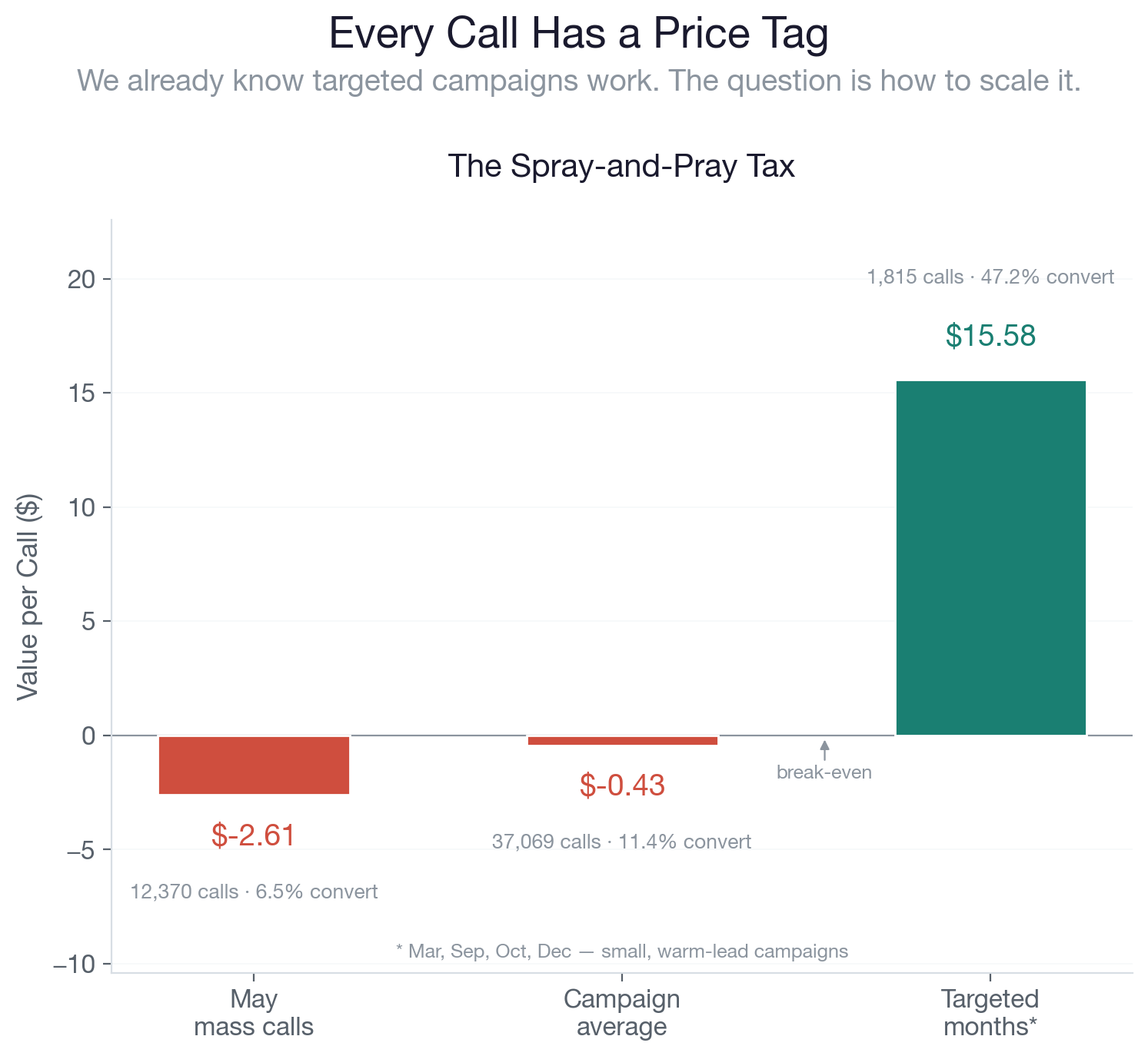
Figure 1. Value per call across May mass calls, campaign average, and targeted months.
A targeted approach focused on high-value demographics is the answer; scaling that approach is the challenge. Our machine-learning (ML) model serves as the bridge between quantity and quality, allowing high-value campaigns to be scaled across tens of thousands of high-value prospects.
2 · What we can do for you
We built our model to help you reach consumers who are in need of your services — and to help you make money. In a recent trial campaign, you called 410 people and lost $157. Our model would have turned that $157 deficit into an $824 profit.
In your next proposed campaign, contacting all 4,100 people on your call list will likely lead to a loss of approximately $1,600. We project that once running your call list through our model, you will make $7,300 by stripping your list down to the 480 highest-value prospects.
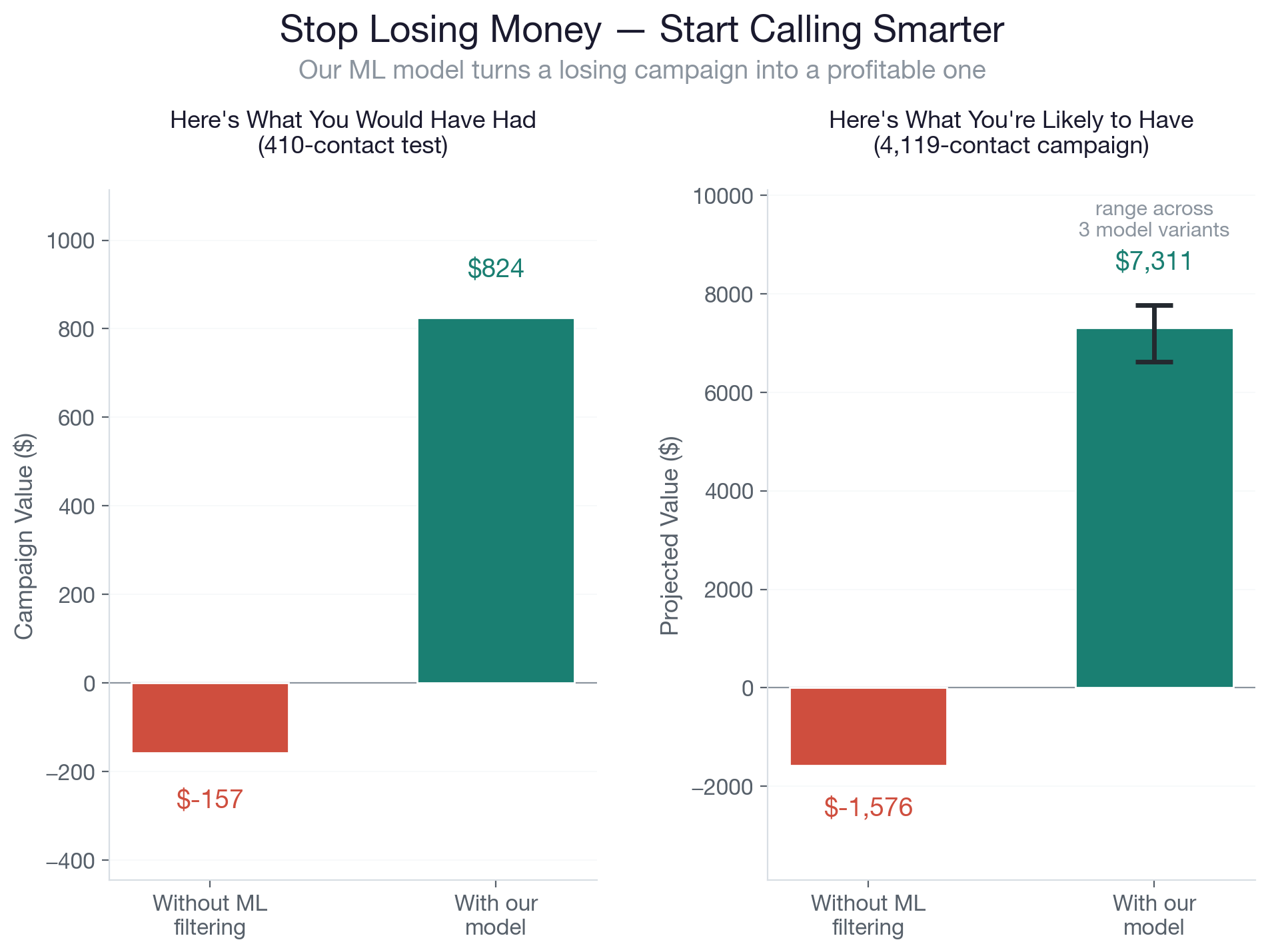
Figure 2. Recent 410-contact test (left) and the projected 4,119-contact campaign (right), with and without the model.
3 · People to call — and people not to
To maximize resource efficiency, our model cleanly separates the database into high-yield priority targets and immediate-skip candidates.
The Golden List focuses entirely on our high-conversion groups. At the very top are previously converted customers, who boast a phenomenal 65.8% conversion rate. Recognizing this massive opportunity, the model shifts this group from a tiny 3% of our historical call list up to 21% of our total outreach. Similarly, students and retirees exhibit exceptionally strong conversion rates at 31.4% and 25.2% respectively. Retirees in particular represent high-liquidity accounts actively looking to lock in reliable term-deposit yields during fluctuating economic climates; the model scales our retiree outreach from a baseline of just 5% up to 23%.
In stark contrast, the Black List identifies the high-waste groups where our budget goes to die. Customers contacted via traditional landlines (5.3% conversion) and those in blue-collar employment blocks (6.8% conversion) drastically underperform our baseline. Historically, these two segments clogged our pipeline, consuming a staggering 58% of all marketing calls while returning almost no value. The model aggressively prunes this dead weight, shrinking their combined presence on the call list down to a lean 11% so your team stops wasting time on dead ends.
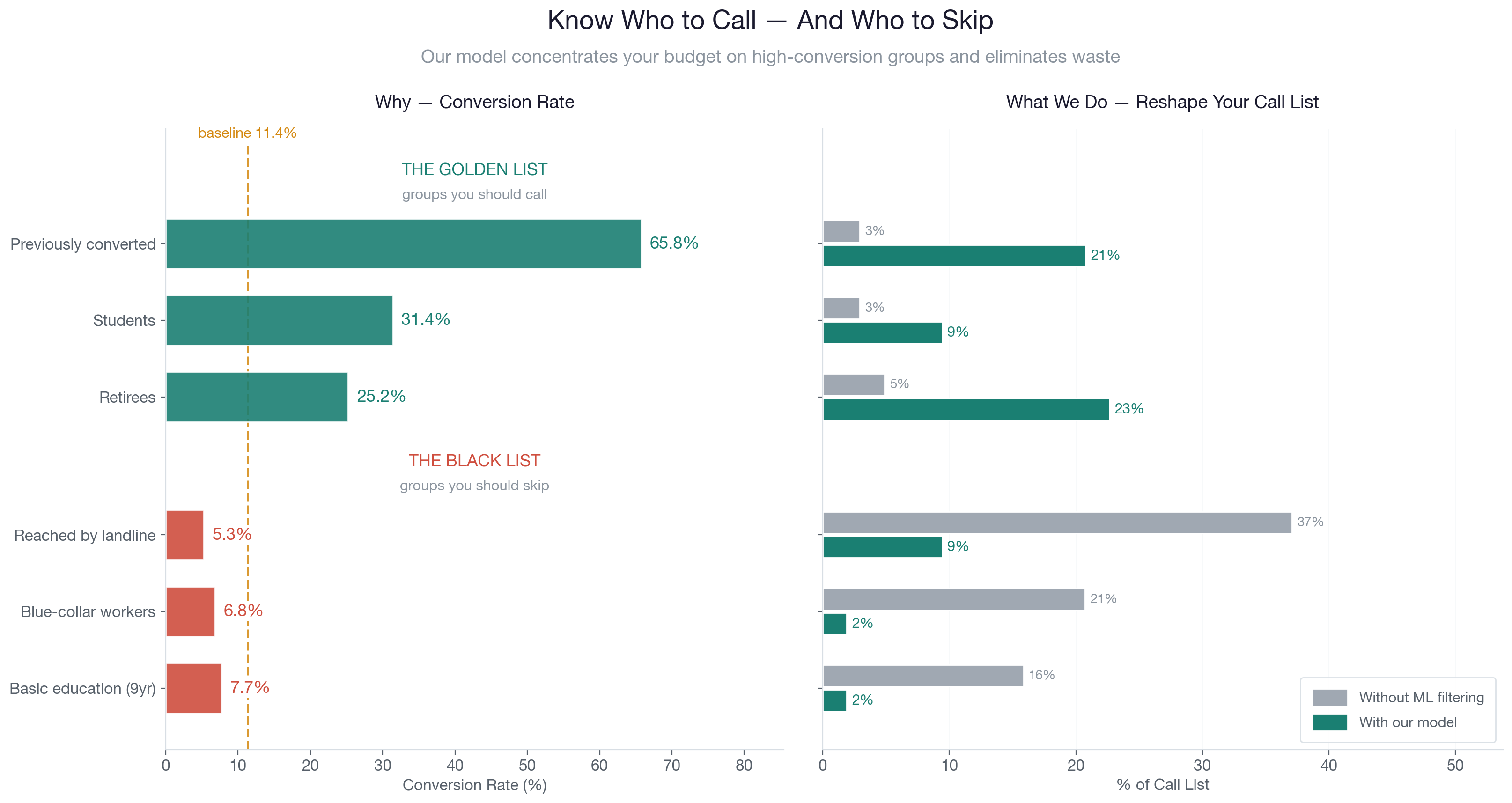
Figure 3. Conversion rates by segment (left) and the resulting call-list reshape (right).
4 · Steps for improvement
The best metric we currently have to target the value of a customer is how likely they are to place money in a CD. To project the cost and value of each call we use the average time on a call (30 min) and the average amount of money placed in a CD ($4,700). Replacing those defaults with your internal labor and savings data is the single biggest lever for tightening the model’s value estimates further.
Want the full methodology? The Technical Deep-Dive walks through the three candidate models, the cost-sensitive evaluation function, and the actual training code for each model.